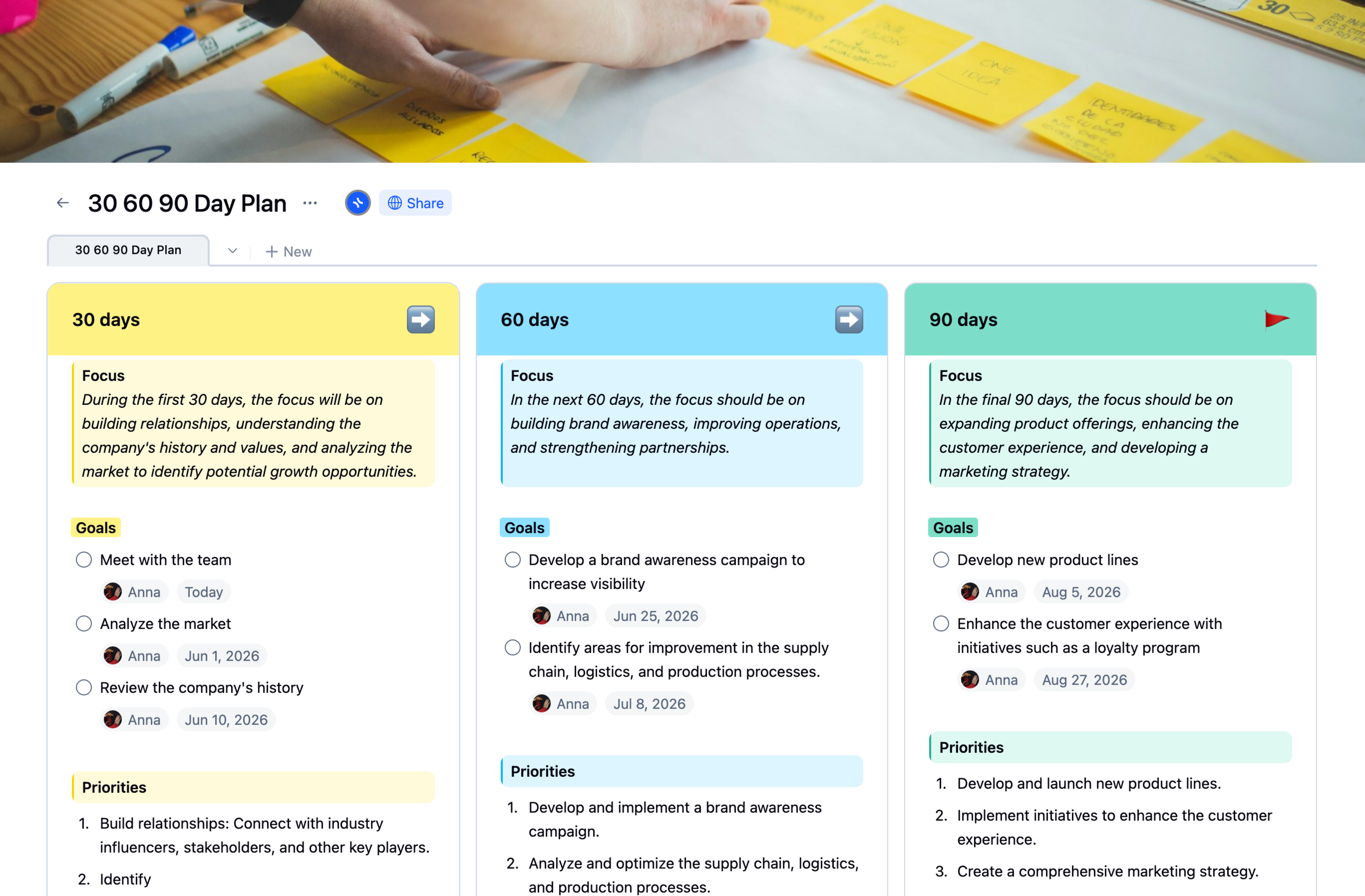
30 60 90 Day Plan Template (Free)

Share
The first 90 days decide whether a new role becomes a success story or a turnover statistic. According to Gallup research, only 12% of employees strongly agree their company does a great job of onboarding new hires, and roughly one in three new hires leaves within the first 90 days (Enboarder, Winning the First 90 Days HR Leader Survey). A structured 30-60-90 day plan closes that gap. This free xTiles template gives you the framework leaders, sales reps, and new hires use to demonstrate commitment, clarify priorities, hit measurable milestones, and succeed in their new role.
Template Level
Beginner
Advanced
Share

Key Takeaways

  • One in three new hires leaves within the first 90 days, according to Enboarder’s Winning the First 90 Days HR Leader Survey, and 50% of senior outside hires fail within 18 months (SHRM).
  • Organizations with a structured onboarding process improve productivity by over 70% and retention by 82%, per Brandon Hall Group research.
  • A formal 30-60-90 day plan is one of the structured onboarding tactics directly cited by SHRM and Harvard Business Review as a driver of faster ramp-up time and higher first-year retention.
  • The framework was popularized by Michael D. Watkins, IMD professor and author of the Harvard Business Review bestseller The First 90 Days, dubbed “The Onboarding Bible” by The Economist.
  • A good plan splits the 90 days into three phases — Learn (Days 1-30), Contribute (Days 31-60), Lead (Days 61-90) — with explicit focus, goals, priorities, and success metrics for each stage.

A free 30 60 90 day plan template for a person’s goals | xTiles

Starting something new is never easy, especially when venturing into the uncertain and unknown. Throwing people into a whirlpool of new information is never an option. A person needs time and a defined plan to learn and settle down to start being effective. 

A 30-60-90 day plan leads step-by-step through a person’s new job, project, or major undertaking, helping set realistic goals for the first 30, 60, and 90 days. It outlines the main milestones a person should hit in their first few months of employment or a new project — a period that matters more than most teams realize. BambooHR research found that 70% of new hires decide whether a job is the right fit within the first month, and 29% decide in the first week.

A template for 30-60-90 day plan makes the process even easier, providing individuals with a ready-to-use framework for building their plans. It comes in handy for its customization and editing options and appealing designs.

The xTiles 30-60-90 day free plan template offers a well-defined structure suitable for any purpose, including a 30-60-90 day sales team plan, a 30-60-90 day plan for internal promotion, a 30-60-90 day onboarding plan, etc.

Except for that, we offer you a detailed guide on creating your plan and what to include and a 30-60-90 day plan example to make the process even easier.

What is a 30-60-90 Day Plan?

A 30-60-90 day plan is a structured plan that a new hire or human resources managers devise to establish objectives and chart their course of action during the initial 30, 60, and 90 days of a fresh job, project, or any other notable undertaking. 

The framework was popularized by Michael D. Watkins, professor at IMD Business School and author of the Harvard Business Review bestseller The First 90 Days. Watkins argues that every new leader must reach what he calls the “breakeven point” — the moment when the value they create for the organization equals the resources the organization has invested in them. Missteps in the first three months, he warns, can derail a transition entirely.

The intention is to optimize employee productivity and professional development during their initial employment days, often involving overwhelming and confusing experiences. The plan helps streamline and clarify the employee’s tasks and priorities, enabling them to stay focused on what they should be doing.

This is exactly where most companies fail. Gallup research shows new employees typically take around 12 months to reach their full performance potential, yet most onboarding programs end inside 30 days. A 30-60-90 day plan extends structured support across the critical ramp-up window where employees decide whether to stay or leave.

The plan contains three parts:

First 30 days

In the initial month, the focus is on getting acclimated to the new work environment, understanding the company culture, building relationships, and grasping the specifics of the role. The onboarding process and learning phase should be built accordingly to the concrete goals you have in mind when hiring the person, helping them move through this stage more easily.

Some key activities may include:

  1. People familiarize themselves with the company policies and company’s mission, products, services, processes, pain points, etc.

  2. New team members meet their colleagues, and key stakeholders to establish connections and gain insights.

  3. People set short-term goals and milestones to establish a strong foundation for future progress.

  4. A hire learns any necessary tools, systems, or procedures required for the job. Company can provide them with online course and relevant resources if needed.

  5. Finally, people gather feedback and actively listen to understand expectations.

A study by InsightGlobal found that 78% of workers say they are missing one or more tools needed to succeed in their job — knowledge libraries, productivity tools, or general training. The first 30 days are when you fix that gap before it becomes a retention problem.

Next 30 days (60-day mark)

During the second month, the focus shifts toward taking more initiative and contributing to the company goals. The 60-day phase typically includes the following:

  1. People start to assume additional responsibilities or tasks beyond the initial onboarding phase.

  2. Taking initiative, slowly but steadily, becomes necessary.

  3. People start to implement ideas or suggestions based on the understanding gained during the first 30 days.

  4. People start to develop strategies or action plans to address specific challenges or capitalize on opportunities.

  5. People start collaborating with team members and leveraging relationships to drive projects forward.

  6. People continuously seek feedback and adjust approaches as necessary.

Final 30 days (90-day mark)

By the third month, the intention is to fully integrate into the role and make a tangible impact. Activities during this period might involve:

  1. People can take ownership of projects and demonstrate the ability to work independently. For example, if they work in sales, they can demonstrate how many successful sales calls they had during this three-months period or how much time the first sales took them.

  2. People contribute innovative ideas or solutions to enhance processes or achieve goals.

  3. People demonstrate a comprehensive understanding of the role and the organization’s objectives.

  4. People can evaluate progress and metrics to measure success and make necessary adjustments.

  5. People can provide recommendations for future improvements or opportunities.

A good 30-60-90 day plan balances feasibility and challenge, keeping people growing. It breaks big goals into smaller ones and distributes them throughout the three months of adaptation to help new employees avoid being overwhelmed with everything all at once.

Additionally, it has to balance the company’s mission and the employee’s growth goals. When a manager makes a person work on goals that can help them and the company move forward, the plan is a win-win for both parties.

According to Brandon Hall Group’s onboarding research, organizations with a strong onboarding process improve new-hire retention by 82% and productivity by more than 70%. SHRM data adds that structured onboarding can reduce time-to-productivity by 50% or more, with new hires reaching competence in 4-6 months instead of 8-12. The 30-60-90 day plan is one of the most cited structured-onboarding mechanisms in both bodies of research.


What is a 30-60-90 Day Plan Template?

Creating a 30-60-90 day plan using a template offers several advantages that can hugely enhance the planning process and ensure a successful transition or career development. 

Here are some key advantages of using a template for your 30-60-90 day plan:

Structure and Organization

Templates offer a predefined structure that helps people organize their thoughts and create a cohesive plan, whether we speak about new or potential employees or hiring managers.  Their predefined structure also ensures that they systematically cover all essential aspects of their plan.

Time Management

A ready-to-use template helps people to allocate their time effectively across the 30, 60, and 90-day phases. A predefined and designed structure relieves people from creating documents with easy-to-grasp structure, unifying all of its parts, fonts, colors, etc. A template allows one to concentrate on the content of the document. This focus helps you avoid distractions and prioritize tasks contributing to your success.

Adaptability

While providing one with a framework, templates also are flexible enough to be edited on any phase of the plan and to accommodate individual needs and circumstances. For example, the xTiles 30-60-90 plan template can be customized to reflect the unique requirements of any role, industry, or organization.

Represents your professionalism

By using a template for crafting your 30-60-90 day plan template for an interview, one showcases organizational skills, attention to detail, and commitment to success. It adds a professional touch to your plan.

Time-saving

Ready-to-use templates offer time-saving and energy-saving benefits by providing a starting point and eliminating the need to create a plan from scratch.
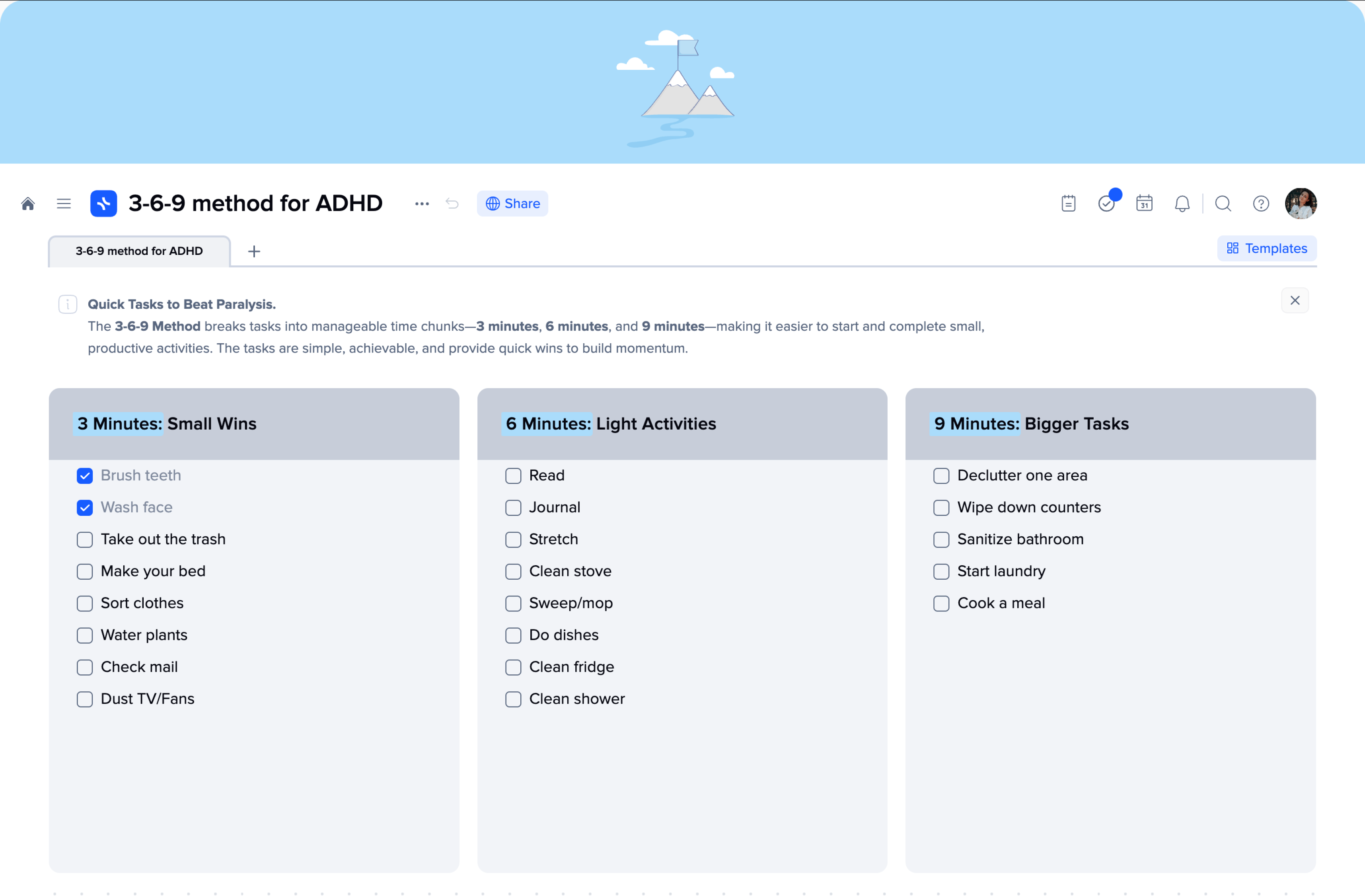
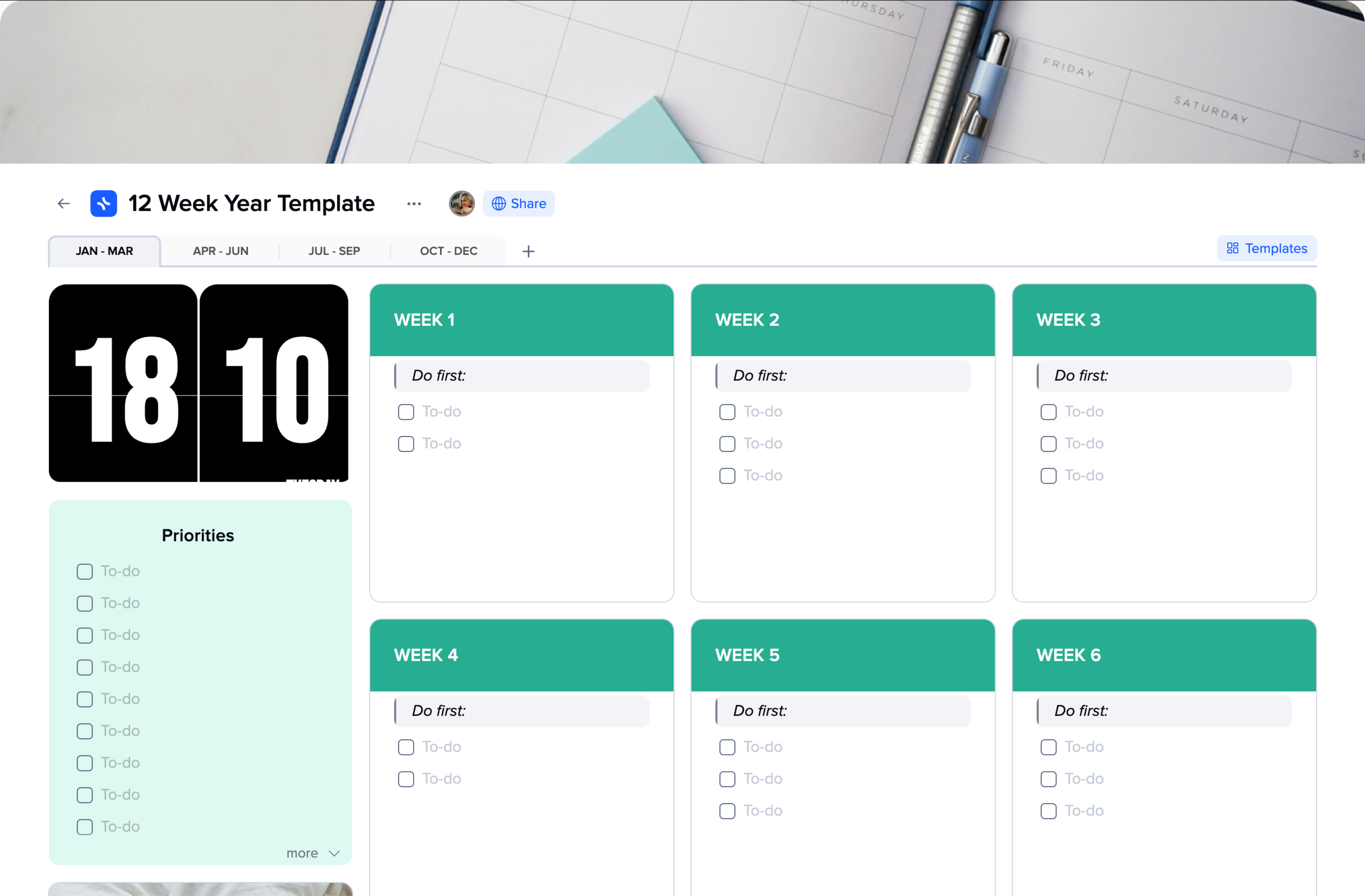
 

A 30-60-90 Day Plan advantages

A 30-60-90 day plan offers measurable advantages for both employees and employers. Harvard Business Review reports that a formal onboarding program — of which a 30-60-90 day plan is a core component — leads to 62% greater productivity and 50% greater retention. Below are the specific advantages that drive those numbers.

 Helps Clarify Goals

The plan helps individuals to establish clear goals and objectives for each phase, providing a roadmap for their actions and priorities. It ensures that their efforts align with the organization’s expectations and desired outcomes, and their work won’t turn out to be useless or unapplicable for general purposes. This matters because BambooHR research identifies “clear role expectations” as the single most important factor in new-hire success, receiving more than double the #1 votes of any other onboarding element.

Helps Structure an Approach

By breaking down the plan into 30-day increments, individuals can approach their tasks in a structured and systematic manner. That helps them stay organized, focused, and productive throughout their initial period.

Helps to Demonstrate Initiative

Presenting a 30-60-90 day plan during an interview or at the beginning of a new role showcases proactiveness and forward-thinking. It demonstrates that individuals have taken the initiative to understand the role, set goals, and outline a strategic approach to deliver results.

Accelerates Learning

The plan becomes a tool to quickly learn the new company’s processes, products, and culture and familiarize with them. The learning process becomes shorter, and new team members can integrate into a team and be productive easier and quicker.

Build Relationships Within the Team and Organization

The plan encourages individuals to connect with colleagues, team members, and key stakeholders, strengthening collaboration and integration within the organization. Gallup research adds weight to this: when managers are actively involved in onboarding, new hires are 3.4 times more likely to describe their onboarding experience as exceptional, and employees with exceptional onboarding are 2.6 times more likely to be extremely satisfied with their jobs.

Helps to Set Measurable Milestones

Each phase of the plan is broken into specific milestones and objectives, allowing individuals to track their achievements, evaluate their performance, and make adjustments as necessary.

Enhances Adaptability and Agility

A 30-60-90 day plan encourages individuals to be flexible and adaptable. They can adjust their strategies and priorities to align with evolving circumstances and emerging opportunities as they better understand the role and the organization.

Helps to Stay Confident and Focused

With a well-defined plan, individuals are better aware of what they need to accomplish and how exactly they can do it. It eliminates confusion that is often an inevitable part of a new job and enables them to remain focused on their goals, contributing to enhanced productivity and performance.

When does one need a 30-60-90 Day Plan?

A 30-60-90 day plan is usually used by people recently hired or promoted or by people who recently hired someone. The plan helps people adapt and grow simultaneously, serving as a roadmap for the first three months.

There are many situations where a 30-60-90 is beneficial:

30-60-90 Day Plan for Interview

Candidates often have to come to an interview with their own vision of their first three months in the company. They present their 30-60-90 day plan to prove their motivation and focus. The plan helps demonstrate their understanding of the role and how they would approach it if hired. It is a powerful tool to make a lasting impression on the hiring manager and distinguish yourself from other candidates.

30-60-90 Day Plan for New Job

When you only start a new job, questions arise constantly. You need to catch up with the rest of the team, and the plan will help to establish clear goals and objectives, prioritize tasks, and ensure a smooth transition into the new role.

Promotions or Transitions

If you were promoted internally, a 30-60-90 day plan would help you align your objectives with the expectations of the new role. Suppose you were transitioned to a new department or team within the same organization. In that case, the plan will help you integrate with your new teammates quicker, allowing you to set milestones and communicate your plans.

Performance Improvement

Sometimes, when an employee’s performance is below expectations, the plan will help to reestablish their workflow, helping them learn the missed information.

Career Development

Professional growth is one of the most important factors in keeping people focused on their dreams. The plan will help set goals, develop new skills, and outline steps to advance people’s careers within their current positions.

How to create a 30-60-90 Day Plan using the xTiles Template?

Mastering the art of crafting a compelling 30-60-90 day plan may be challenging. That’s why many people skip the preparation phase and rush straight to the action. However, the ability to create a cohesive and highly-representative 30-60-90 is essential for any job seeker or employee aiming to improve their skills and achieve tangible results.

The most common failure mode is setting vague objectives that lack clarity and measurability. Zavvy’s research found that 60% of companies don’t set goals for new employees at all, and 23% of employees who left a job within six months said clearer guidelines on their responsibilities would have helped them stay (Zippia). A plan without measurable goals is the corporate equivalent of a New Year’s resolution.

We made a quick yet detailed guide on how to write a plan that sets you up for success. Learn this skill for once and polish it with the xTiles 30-60-90 Day Plan Template.

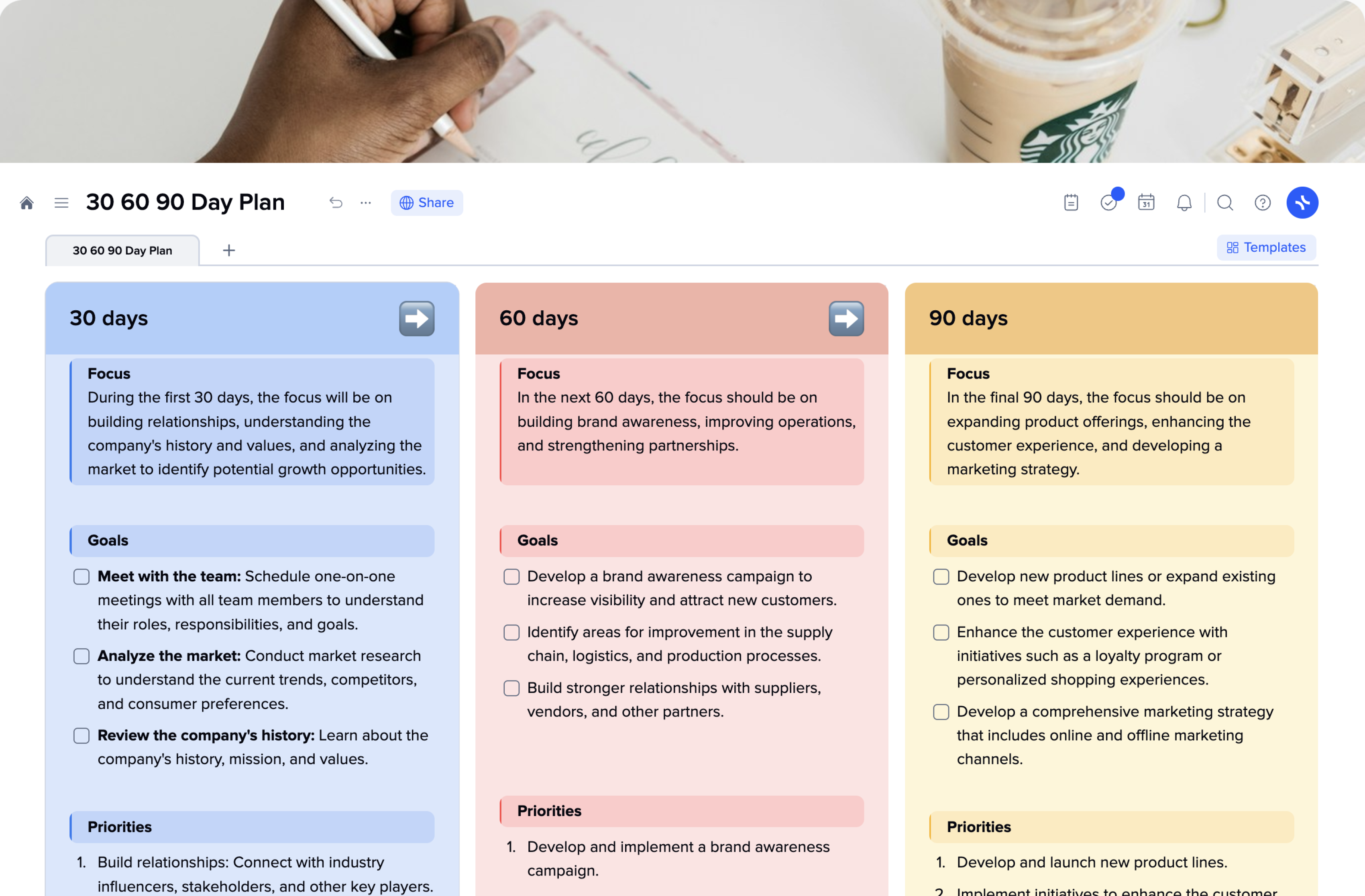
The xTiles 30-60-90 Day Plan Template offers you to divide each 30-day stage into four key elements:

Focus

No matter what tasks you do, this aspect remains crucial. During the first 30 days, people usually concentrate on understanding the company’s history and values, establishing relationships within the team, analyzing main competitors, etc.

The second stage is, as a rule, focused on developing how to use the knowledge gained during the previous 30 days. And the last phase is about implementing your strategies and polishing everything you’ve learned in practice.

Goals

The goals people set in their 30-60-90 day plan depend on their position and responsibilities. To make it easier, we offer you to divide this section into three:

  • Learning Goals: Develop strategies to absorb as much information as possible about your company, team, and role.
  • Initiative Goals: Determine actions that will help you stand out and make a positive impact.
  • Personal Goals: Outline how you will integrate with your company and team, fostering collaboration and building relationships.

Priorities

Everything is important, yet there are aspects that require more attention and effort. You may not reach your tasks or goals when you don’t prioritize them. Prioritizing tasks is important because it helps optimize time and focus on what truly matters for achieving goals efficiently.

Metrics of success

Every stage will have its own key metrics for success, and they should grow from stage to stage to help you develop your skills and abilities and to challenge yourself.

Creating your 30-60-90 plan

First of all, you need to set concrete and measurable goals. Avoid general aspirations like “write a better blog post” or “improve brainstorming.” Instead, do your best to set realistic, quantifiable, and focused goals. That may take time and many drafts, but you need to do it in order to reach the desired results with your plan and be able to track your progress and measure your success as you work towards achieving them.

Then you need to understand team goals. If you only apply for a new job, it may be hard or impossible. Be ready that what you write might not align with the real situation. Yet still, your plan will be a great representation of your potential.

If you’re creating a 30-60-90 day plan for managers who were promoted or transitioned from another department, understanding the team’s goals and advantages and disadvantages should be at the center of your plan.

It will be easier if you have previous experience working with a team on similar projects. Most of the time, teams from one field of expertise face 90% of similar problems and 10% of specific problems caused by human factors.

Gain a thorough understanding of your team’s objectives and their underlying purpose. By aligning your personal goals with those of the team, you can effectively contribute towards their success and stay motivated to work diligently.

Next, you will need to identify top priorities. Connect your responsibilities with the overarching goals of your team. This alignment ensures that your tasks directly fulfill the team’s needs, making you accountable and fostering a collaborative environment.

The next move is to define progress measurements. You will need to establish specific metrics to track your progress and performance. Regularly meet with your manager to seek feedback on your work and evaluate your improvement. Monitor key performance indicators which depend on your position, responsibilities, field of expertise, etc.

It’s important to remember that success in your new role requires more than achieving performance goals. Take the initiative to learn about your team and company, proactively engage with colleagues, and build strong relationships – an aspect many new hires overlook.

You may choose different structures for your plan stages. However, consistency is key. It will help showcase your logical and strategic thinking and lead you through these three months of assimilation.

Depending on your purpose, your 30-60-90 day plan will have some specific features, and there will be details to pay attention to. Here are three of the most popular types of the plan.

How to create a 30-60-90 Day Plan for Managers?

Taking the position of a manager is always a challenge. Management roles involves dealing with higher expectations than others and are expected to deliver high performance right from the start.

The stakes are particularly high here. According to SHRM, 50% of senior outside hires fail within 18 months in their new role, and Michael Watkins’s research at IMD has shown that the first 90 days disproportionately determine whether a manager will hit that statistic or avoid it. This is exactly why HBR positioned The First 90 Days as essential reading for every new leader.

Managers must immerse themselves in the organization, swiftly implement impactful changes, and comprehend the culture, team dynamics, existing processes, and challenges before addressing them.

That’s why a 30-60-90 day plan for a new manager role requires more attention and thorough analysis. Thankfully, they are pretty similar for most industries. Our guide covers the key goals and objectives of every manager who strives to become a part of the team while making it better and more productive.

So, let’s look at the essential steps for managers to include in their 30-60-90 day plan.

During the first 30 days, you will need to absorb information comprehensively. Every time before taking action or making a decision, ensure you have a thorough understanding of the context. This initial stage will be full of diving into existing documentation, participating in meetings, engaging with direct reports and team members at different levels, and asking insightful questions, hundreds of questions.

Also, during the first stage, you will need to establish alignment with the team. Otherwise, further cooperation will be hard. The faster you break the ice, the better.

You need to connect with new colleagues, learn about their roles, and foster alignment.

As a manager, you play the main role in your team’s work processes. One of your responsibilities is setting the organization’s vision and removing obstacles for your team to strategize and execute effectively.

You may show your teammates interest in their opinions and expertise by asking them about what they perceive as potential internal or external threats to the business.

Also, you need to learn your team from A to Z while being unbiased. Watkins, in The First 90 Days, calls these high performers the people you should keep, develop, and protect first — they consistently go above and beyond their role’s requirements and shape team culture more than any process change you can introduce. Not everyone may fit this category. That’s why ensuring that key positions and teams have at least one such individual to lead, inspire, and strengthen the team is crucial.

Also, you need to learn your team from A to Z while being unbiased. Identify individuals who consistently go above and beyond their role’s requirements, commonly known as A players. Not everyone may fit this category. That’s why ensuring that key positions and teams have at least one A player to lead, inspire, and strengthen the team spirit is crucial.

Now, we can move to the second phase.

You’ve already got to know your new company and the people you will be working with. So, it’s time to translate your knowledge into specific, measurable goals that propel your team forward.

As a manager, you don’t have to change everything upside down to streamline work. It may be enough to improve existing practices to explore opportunities to streamline operations.

You learned, you eliminated bottlenecks, and now you need to move forward. The final stage is for driving operational changes.

Focus on areas of the business that can yield quick results. Watkins refers to these as “early wins” — visible, credibility-building accomplishments in your first 90 days that establish momentum and earn you the political capital you’ll need for larger changes later. Address and remove obstacles that hinder progress, allowing you to achieve goals and enhance overall performance.

As an executive team member, actively participate in high-level company initiatives. Leverage your expertise and experience to contribute to the organization’s vision and strategy, collaborating with fellow managers to drive the company forward.

How to create a 30-60-90 Day Plan for Interview?

A well-crafted 30-60-90 day plan may make you stand out from other candidates for the desired position. However, it might be a challenge to define your goals for the position and the company you have a limited knowledge of. So, what should you put into your 30-60-90 plan, and what should you omit to make a positive impression during an interview process?

Begin by thoroughly reviewing the job description. Job postings often outline both the responsibilities and qualifications for the role. Look for overlaps and connections between these two sections, and consider how you can transform them into meaningful goals for yourself over three months.

Let’s say a company is looking for a person with over three years of experience in SEO, with responsibilities including monthly tracking of the company and the main competitors’ websites’ performance to create new strategies for promotion. Now, imagine yourself harnessing these requirements to create an impactful 30-60-90 day plan.

During the initial 30 days, your plan should focus on mastering the company’s key performance metrics. You delve into understanding the intricacies of the metrics and gather insights that will guide your actions moving forward. Armed with this knowledge, you can develop plans for further website promotion and solutions to current traffic issues and gaps.

As you progress into the next 30 days, your plan shifts gears. You can strategically improve the website promotion approach based on everything you learn about the company’s websites, competitors’ websites, their field of expertise, and current and previous strategies.

You analyze data easier, and you can quickly identify new growth opportunities. Your efforts begin to shape a positive trajectory for the company’s website performance.

Finally, in the last 30 days of your plan, you take the lead. Building upon your expertise and the progress made, you steer the team towards an enhanced progressive SEO strategy.

Your 30-60-90 day plan for the interview should showcase your ability to not only meet expectations but exceed them. It should present you as a person with a strategic mindset, adaptability, and a results-driven approach.

How to create a 30-60-90 Day Plan for a New Job?

Let’s explore another scenario where a 30-60-90 day plan becomes invaluable: the first week of a new job. Hiring managers use this plan as a powerful tool to understand a new employee’s approach, address any concerns they may have, and set them up for success.

From the moment a new employee steps through the door, their transition into the role begins. By providing them with a well-crafted 30-60-90 day plan, a hiring manager creates an environment that fosters their growth and assimilation. The plan establishes open communication lines, identifies and addresses any apprehensions or preconceived notions a newcomer may have, and builds a strong foundation for collaboration.

Now, let’s consider the employee’s perspective. Even if you weren’t explicitly asked to create a 30-60-90 day plan in the first week, creating one for yourself is highly beneficial. The first days at a new job may be overwhelming for many reasons, including new people, new information, new responsibility, etc. A step-by-step action plan and development become a compass, guiding people through the initial months and helping them navigate unfamiliar territory.

Enboarder’s Winning the First 90 Days survey found that 86% of new hires decide how long they will stay with a company within their first six months. Your 30-60-90 day plan is, effectively, the document that wins or loses that decision.

It’s important to recognize that these initial months also provide an opportunity to make a striking first impression. By proactively outlining a person’s goals, milestones, and action steps in the 30-60-90 plan, a hiring manager helps showcase your dedication, ambition, and readiness to contribute from day one.

A well-crafted 30-60-90 day plan sets the stage for success, both for the new employee and the hiring manager. It establishes a solid foundation for collaboration, facilitates effective communication, and ensures everyone is aligned on expectations.

Ultimately, whether you’re the manager or the employee, embrace the power of planning and make those crucial early days count.

Benefits of Upgrading your xTiles Plan

While the template you’ve chosen is completely free, why settle for basic when you can supercharge your experience? Here is what you can expect with our Pro Plan:
  • Access to advanced templates that make your planning, managing, tracking, and collecting a stunning visual experience.
  • Unlimited personal spaces and pages to create and execute all of your projects, even the bravest ones.
  • Unlimited spaces to share to work on group projects or manage teams.
  • Recurring tasks to automate the planning process.
  • Unlimited storage to save all of your information in one place.
  • Google Calendar integration to manage your schedule from one place.
  • Advanced color customization to enhance organization through custom palettes—because the visual aspect matters.
  • A timeline view to visualize your projects and their approximate duration.
  • Forms to gather data from anyone and save it to your collections.
  • Linked pages to synchronize the information across multiple projects in real time.
  • Priority support to get your answers anytime you need.
Ready to transform the way you work, plan, and organize? Subscribe to xTiles Pro today and take full control of your creative process!
More
Less
30 60 90 Day Plan Template (Free)
Get started with this template right now

Templates for You

Try our ready-made templates from different categories to help you and your team be productive

Frequently Asked Questions

Can’t find the answer here? Contact support
  • What should you include in a 30-60-90 day plan?

    In a 30-60-90 day plan, you should include your goals and objectives for each period, key tasks and projects you will focus on, milestones you aim to achieve, and how you plan to contribute to the organization's success. Most effective plans organize each 30-day block around four elements: Focus (what you're concentrating on), Goals (split into Learning, Initiative, and Personal), Priorities (what gets attention first), and Metrics of Success (how you'll measure progress). 

  • How do you create a 30-60-90 day marketing plan?

    To create a 30-60-90 day marketing plan with xTiles, follow these steps:

    1. Sign up for a free xTiles account if you haven't already.
    2. Choose a marketing plan template from the xTiles template gallery or create a custom board.
    3. Divide the board into three sections for the 30-60-90 day periods.
    4. Define your marketing goals and objectives for each period, such as increasing brand awareness, generating leads, or launching a campaign.
    5. Break down the tasks and initiatives needed to achieve these goals and assign them to the appropriate time periods.
    6. Specify the strategies, channels, and tactics you will utilize and include any relevant details or deadlines.
    7. Use the board's visual features to track progress, update status, and collaborate with your marketing team.
  • How long should a 30-60-90 day plan be?

    A typical 30-60-90 day plan is one to three pages of structured content, or one visual board if you're using xTiles. The length matters less than the specificity: each phase should have 3-5 clearly defined goals with measurable success metrics. According to Brandon Hall Group research, the structure itself, not the volume of content, is what drives the 82% retention improvement and 70%+ productivity boost.

  • What is an example of a 30-60-90 day plan for a new manager?

    For a new manager, a 30-60-90 day plan typically looks like this:

    • Days 1-30 (Learn): Meet every direct report 1-on-1, audit existing processes, review last 6 months of team performance data, identify the top 3 obstacles holding the team back.
    • Days 31-60 (Contribute): Propose and implement one "early win" (a visible improvement Michael Watkins identifies as critical), align team goals with company OKRs, start coaching individual team members on stretch goals.
    • Days 61-90 (Lead): Launch one strategic initiative, present a 6-month roadmap to leadership, establish recurring review cycles and team rituals that will outlast the onboarding period.
  • Should I bring a 30-60-90 day plan to an interview?

    Yes, especially for management, sales, and senior individual contributor roles. Presenting a 30-60-90 day plan during a final-round interview signals that you've done your homework on the role, understand the company's priorities, and think in measurable outcomes. SHRM and BambooHR data both show that clear role expectations are the single most-cited driver of new-hire success — bringing a plan means you and the hiring manager establish those expectations together before day one.

Want to know more?

Go to our Academy to learn more about xTiles functionality

Our Reviews

See how xTiles helps people worldwide streamline their workflow
Filling in the essentials